Sign in. It’s quick, free and it’s up to you.
An account is an optional way to support the work we do. Find out more.
Sign in. It’s quick, free and it’s up to you.
An account is an optional way to support the work we do. Find out more.

THE EUROPEAN UNION has reached an agreement on the long-awaited directive to combat violence against women.
The directive is the first of its kind and instructs member states to introduce legislation to combat acts such as female genital mutilation, forced marriage, the non-consensual sharing of intimate images, and much more.
The legislation has been the main priority for Fine Gael MEP Frances Fitzgerald, who was one of the lead negotiators of the law.
Fitzgerald welcomed the agreement today but expressed disappointment that the EU was unable to agree upon on a union-wide definition of rape.
The EU directive to combat violence against women is the first piece of EU legislation to focus on the protection, prevention, and prosecution of domestic violence and violence against women in Europe.
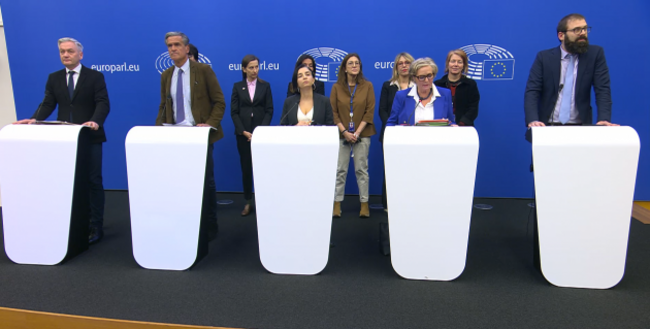
It is hoped the directive will give women equal levels of protection across the EU, regardless of the state they are in, as it instructs European countries to introduce tough laws on a litany of violent and sexual crimes.
Member states are now directed to introduce laws to prevent and prosecute:
Co-rapporteur of the law and Dublin MEP Frances Fitzgerald said the directive will “herald a new era in the fight against violence” for all citizens in the EU and welcomed the agreement between the Parliament, Commission and Council today.
Fellow-rapporteur Swedish MEP Evin Incir welcomed the directive, specifically highlighting the introduction of legislation to stop female genital mutilation, force marriages and cybercrimes.
A debate among member states flared up throughout the negotiations of the directive as it aimed to introduce a union-wide definition of rape, legally-based on consent.
While the Commission and Parliament came to agreements on the matters, the European Council fell short. These definitions have been left out of the legislation announced today.
While welcoming the directive in Strasbourg this evening, Fitzgerald was quick to voice her disappointment with the EU’s failure to reach an agreement on the definitions.
“There is unfinished business quite clearly,” she said today.
“Many of us would have got quite disturbing insights into the attitudes to rape in member states, when we could not get a consent-based definition of rape into this directive.
“So that is a very big disappointment given the scale of the statistics of violence across the union,” she added.
Fitzgerald highlighted that instead of clear definitions, article 36 of the directive encourages member states to move towards a consent-based structure to rape legislation.
Incir said that this is not the end of the discussion and that the law includes a five-year revision clause that she hopes will reopen discussions to introduce such definitions on a later date.

To embed this post, copy the code below on your site












have your say